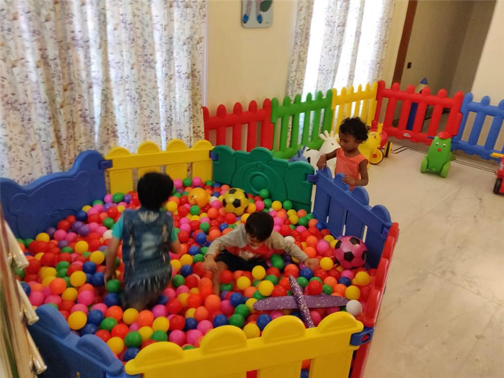
Tabula rasa ('blank slate') is the theory that states ‘individuals are born without built-in mental content, and therefore all knowledge comes from experience or perception’. In psychology, the term ‘blank slate’, or tabula rasa, actually refers to a belief that at birth, all humans are born with the ability to become literally anything or anyone. So the Child can learn anything and everything. That is why parenting is becoming very important. Whatever we write in the blank state will in turn be in the actual child. By the age of 5, 90% of the brain’s capacity has already developed. A child's brain is more receptive to learning during the first 5 years of his/her life than at any other point in time. What’s most relevant here is that the brain is most plastic or flexible in the first 5 years of life. The more you exercise different areas of the brain in the early years of development, the more lasting an impact it will have on their learning ability